
Saber Salessabersales.com915-598-8598 · Sabersales@sbcglobal.net
Saber Sales product documents
Product care sheet
Keep the product’s supplied care information and relevant general guidance together.
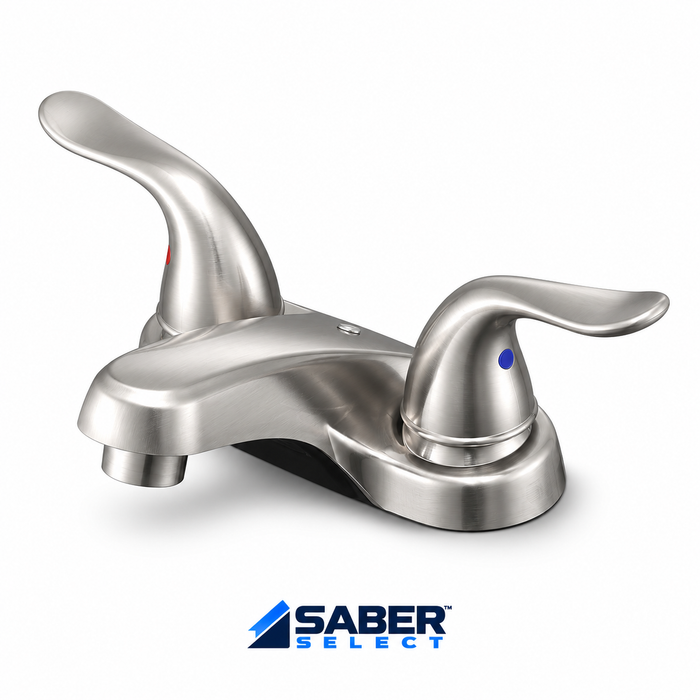
Saber Select™ 4 in. Centerset 2-Handle Bathroom Faucet with Pop-Up Drain (Brushed Nickel)
- Brand
- Saber Select™
- SKU / Item reference
- Item # 1223996 | Model # 1223996BN
- UPC / Barcode
- 12239961223
The exact model, finish, and material determine the approved method. Use the manufacturer’s care instructions to choose products and procedures; a cleaner suitable for one finish may damage another.
Suggested for this product. Instructions for the exact model take priority.
Replacement parts & components
- Identify the exact part number, material and equipment model before selecting a care method. A replacement component does not necessarily use the same cleaning method as the whole appliance.
- Follow the instructions supplied with the part for handling, storage and maintenance. Keep seals, contacts and protective packaging intact as directed until use.
- Use the equipment service instructions or a qualified technician when inspection requires disassembly. General component care does not establish compatibility or provide installation steps.
Water filters & filtration components
- Use the exact filter and system instructions to identify the cartridge, housing and approved replacement. Water filters are not cared for like HVAC air filters.
- Follow the specified replacement or cleaning procedure. Do not assume a disposable cartridge can be rinsed and reused, or apply a generic replacement interval.
- Check accessible housings and connections for visible leakage or damage. Follow the system’s approved shutdown and service instructions before opening any housing.
Stainless steel & coated finishes
- Identify whether the surface is bare stainless steel or a fingerprint-resistant or other coated finish.
- Use a soft cloth and a cleaner approved for that exact finish. Follow the manufacturer’s direction for wiping, rinsing, and drying.
- Avoid abrasive pads, steel wool, and unapproved chemicals. Do not assume stainless-steel polish is suitable for a coated surface.
Flooring: vinyl, laminate, tile & wood
- Identify the flooring material and finish before choosing a cleaner. Remove loose grit using a method approved for the floor.
- Follow the flooring manufacturer’s limits for water, cleaning concentration, and equipment.
- Do not assume steam, soaking, wax, or a tile cleaner is suitable for vinyl, laminate, or wood. Report loose flooring or open joints before wet cleaning.
Faucets, fixtures & decorative finishes
- Identify the finish: chrome, brushed, painted, plated, or another coating may need different care.
- Use the finish manufacturer’s approved cleaner and a soft cloth. Follow any rinsing and drying directions.
- Do not assume an acid descaler, bleach, abrasive pad, or soak is safe for every finish, aerator, or seal.
Range-hood grease & charcoal filters
- Confirm the hood model and filter type before removing or ordering a filter.
- Follow the manual for removing and cleaning washable grease filters, including whether dishwasher cleaning is allowed.
- Do not wash a charcoal filter unless its exact instructions allow it. Replacement and cleaning schedules depend on the filter and use.
Refrigerators, ranges & dishwashers
- Find the care section for the exact model and identify which parts are user-removable.
- Use only approved cleaners and methods for interior liners, glass, seals, burners, racks, and control panels.
- Do not use oven-cleaning products or self-clean procedures on other appliances or parts unless their exact instructions permit it.
Air filters & cooling equipment
- Record the existing filter dimensions, airflow direction, and equipment model. Confirm the approved filter type before replacement.
- Follow the equipment and filter instructions for inspection, cleaning, or replacement; not every filter is washable.
- Use the verified interval for your model and conditions when creating a reminder. Do not assume one rating or replacement interval suits every system.
Washers & dryers
- Check the model’s instructions for detergent dosing, dispenser care, door seals, and any cleaning cycle.
- Clean the dryer lint screen as directed; use the approved process for any washing-machine filter.
- Keep records of cleaning and any continuing odor, leak, or drying issue. Internal service and exhaust-path work may need a qualified provider.
Lighting fixtures & bulbs
- Use the exact fixture and bulb instructions for turning off power, cooling and cleaning. The finish, lens and shade may each need a different method.
- Clean accessible exterior surfaces only as directed. Keep liquids and sprays out of electrical openings; do not assume a diffuser or shade can be immersed.
- Use only the specified replacement lamp or accessory. For integrated LED fixtures or damaged wiring, follow the manufacturer’s service guidance rather than opening the unit.
Electrical devices, cords & accessories
- Check the exact device instructions before cleaning or inspecting it, including how to disconnect power safely.
- Keep cleaners and moisture away from contacts, receptacles and device openings. Use only the exterior cleaning method approved for that device.
- Stop using damaged cords, cracked devices or equipment showing heat damage. Have electrical defects assessed by a qualified professional; a care sheet does not provide wiring instructions.
Water heaters
- Use the manual for the exact model and fuel type. Follow its inspection and maintenance schedule; flushing and other procedures are not the same for every heater.
- Keep the accessible surrounding area clear as required by the installation instructions, including any specified ventilation and service clearances.
- Record leaks, corrosion or unusual operation and request qualified service. Do not remove gas or electrical covers or operate safety devices based on general care guidance.
Pipes, fittings, valves & supply lines
- Identify the exact pipe, fitting, valve or connector material before choosing a cleaner or maintenance method. Check the manufacturer’s compatibility and service instructions.
- Visually check accessible connections for leakage, corrosion or damaged surfaces. Record the part and location so a suitable replacement can be selected.
- Do not assume different plastics, metals, seals or braided connectors accept the same chemicals, polishing products or tightening procedure. Have leaks assessed before continuing use.
Doors, windows, screens & weatherstripping
- Identify the door or window material and finish. Use the manufacturer’s separate directions for glass, frames, screens and weather seals.
- Remove accessible loose debris from tracks and surfaces only by an approved method. Avoid cleaners or tools that can damage coatings, glazing or seals.
- Check operation and visible weatherstripping. Use only specified adjustment or lubrication methods; request service for damaged glass, binding assemblies or failed seals.
Locks, hinges, hardware & fasteners
- Match the care method to the exact finish and hardware type. Decorative coatings, lock cylinders and moving joints can require different products.
- Inspect accessible hardware for looseness, corrosion or wear and follow the manufacturer’s adjustment instructions. Do not assume one lubricant is suitable for every lock or hinge.
- Use replacement hardware and fasteners with the specified size, material and rating. Request service when damage affects safe latching, support or operation.
Heating, cooling, fans & ventilation
- Use the exact equipment manual for power isolation, accessible cleaning and the maintenance schedule. Different heating, cooling and ventilation systems need different procedures.
- If a filter is fitted, confirm its size, type and whether it is replaceable or washable before cleaning or replacing it. Keep specified airflow and service clearances open.
- Record unusual noise, reduced airflow, leaks or damaged electrical parts and request qualified service. Do not open refrigerant, combustion or electrical sections using general care instructions.
Evaporative coolers
- Use the exact cooler manual to identify the pad or media type, water system and seasonal service requirements. Do not treat evaporative media as a standard HVAC air filter.
- Follow the specified shutdown and cleaning instructions before working around water, fans or pumps. Use only the water treatment or scale-removal method approved for the unit.
- Check accessible areas for leaks, damaged media or unusual operation. Ask a qualified technician about seasonal startup, shutdown or repairs when the manual calls for service.
Outdoor, garden & irrigation products
- Check the exact product instructions for outdoor exposure, cleaning and storage. Furniture finishes, irrigation parts and powered equipment require different care.
- Remove accessible debris only by an approved method and inspect visible surfaces, hoses or connections for damage. Use the specified shutdown procedure for powered equipment.
- Follow product-specific weather and freeze-preparation instructions. Do not assume every outdoor item can remain exposed, accept a pressure washer or use the same winterization procedure.
Hand tools, power tools & accessories
- Use the exact tool manual for shutdown, battery removal and cleaning. Match the method to the tool, accessory and material; do not assume all tools can be washed.
- Inspect accessible cords, guards, handles, batteries and working accessories as directed. Remove damaged equipment from use until it has been assessed.
- Store tools and batteries under the manufacturer’s stated conditions. Use only specified replacement accessories and service procedures; do not improvise battery or electrical repairs.
Paint, coatings, sealants & application tools
- Use the exact product label and technical sheet for curing, cleaning, storage and recoating. A dry surface is not necessarily fully cured.
- Match tool cleanup and painted-surface cleaning to the specified coating chemistry and finish. Do not assume water or a solvent is suitable for every product.
- Keep containers labeled and follow the product’s storage, spill and disposal directions. Consult its safety data sheet when applicable; never mix products based on general care guidance.
Cleaning products & janitorial supplies
- Use the exact label for dilution, compatible surfaces, contact time and protective equipment. General care guidance does not replace the product instructions.
- Keep chemical products in their labeled containers and never mix them unless the manufacturer explicitly directs it. Follow the assigned safety data sheet when applicable.
- Clean and store reusable mops, brushes, containers and other supplies according to their own material instructions. Replace damaged or disposable components as specified.
Safety equipment & personal protection
- Use the exact manufacturer instructions for inspection, fit, cleaning and replacement. Required care depends on the protective equipment and its intended use.
- Do not wash or reuse an item merely because similar equipment is reusable. Check any published service life, expiration or replacement criteria.
- Remove damaged or contaminated equipment from use as directed. Have alarms, extinguishers and other life-safety devices maintained according to their own listed procedures.
Building materials & installed surfaces
- Identify the exact material, coating and installation before choosing a cleaning or maintenance method. Follow the product’s technical and care sheets.
- Store uninstalled materials under their stated moisture, temperature and support conditions. Keep product labels and batch information when supplied.
- Inspect visible installed surfaces for damage or moisture concerns and obtain the specified repair guidance. Do not assume cleaners, sealers or coatings are interchangeable between materials.
Cabinets, shelving & storage
- Identify the finish and panel material before cleaning. Follow the manufacturer’s directions for wood, laminate, painted metal, plastic and other surfaces.
- Observe the published load and anchoring requirements. Keep loads arranged as directed and inspect accessible supports or hardware for visible damage.
- Wipe spills using the approved method and avoid leaving moisture on vulnerable joints or edges. Request repair for damaged supports, loose mounting or components that no longer operate correctly.
Keep the exact instructions with the equipment
Use the owner’s manual or product care sheet for cleaning products, removal procedures, and replacement intervals. Record the task and date so the next person knows what was done.
Find product documents